ShakeOut stories
Hear from others around New Zealand why they do ShakeOut, how they get prepared and the advice they have for others.
On this page
At home
The Cronick family know that taking part in ShakeOut can save lives.
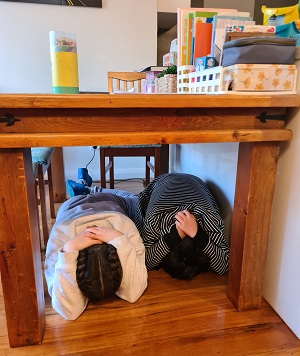
Karen Cronick has been doing ShakeOut at home for years and looks forward to it every time. Karen homeschools two grandchildren and has always thought it's important for them to learn what to do in an earthquake or tsunami.
Karen says that "everyone in Aotearoa New Zealand should be encouraged to participate (not just schools and workplaces). It should be something that families/households discuss routinely."
"It's best to be prepared and have the necessary knowledge, rather than think of an earthquake as something to be afraid of. It only takes a minute or two to practice what could potentially save your life or that of your whānau."
At work
Carbonite Architects understand the risk of natural hazard emergencies.
Carbonite Architects may be a new business, but they know the importance of emergency preparedness.
Office Manager Sarah Comber was based in Gisborne during Cyclone Gabrielle and had no water, power, phone or internet. Feeling isolated and unprepared was challenging. But since she knew the cyclone was coming she was able to prepare for it. This got Sarah and her workplace thinking about how they ensure that they and those they care for stay safe in an emergency.
Sarah says that "not knowing when an earthquake will strike means we could have clients at our premises with varying abilities. Our clients soon become family as tikanga values of whanaunatanga, manaakitanga and kotahitanga are important foundations. We need to make sure we take care of them as we do our family. We are our community and our community is us."
"Living in New Zealand, we are highly likely to experience earthquakes as our tectonic plates move around, a large amount of volcanic activity and being on the global ring of fire in addition to endless stunning coastline (the best being in Tairawhiti of course!). For us, being prepared should be part of every health and safety plan. If we are not prepared, we risk the safety of those who work for us and with us. That's not a risk we wish to take."
Sarah's best advice for businesses taking part in ShakeOut and getting prepared is to get your staff and teams involved. Making safety a priority makes staff feel valued and it extends to their family and homes.
Sarah also recommends making the most of your local Civil Defence Group. They have great education programmes if you're unsure of anything. And fantastic resources and wider connections into our communities that can support you and your team.
At school
Reefton Early Learning Centre share why ShakeOut is so important for tamariki.
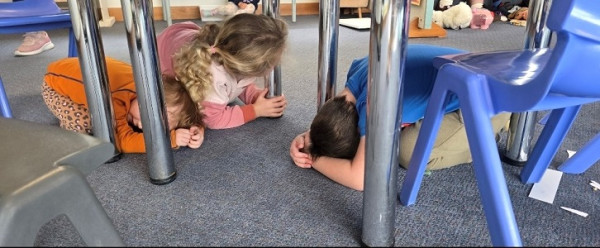
Reefton Early Learning Centre have been doing New Zealand ShakeOut every year since it started!
Kaiako Tumuaki (Principal Teacher) Jo Newburry talked to us about why ShakeOut is so important to them.
"We're based on the West Coast, close to the Alpine Fault, where earthquakes are a part of regular life. Participating in ShakeOut gives our tamariki a chance to learn and practice how to respond safely and calmly in an emergency. We want to equip them with tools they can carry with them for life."
Schools and ECEs have an important role in teaching emergency preparedness. Young children are capable of learning through play, repetition and clear guidance. By introducing them to preparedness in an age-appropriate way, it becomes second nature.
We asked Jo what role they see for ECEs and schools in teaching emergency preparedness.
"ECEs play a vital role in creating calm routines. Helping children feel empowered rather than afraid. We are hubs for our community. ECE and school leaders should be well prepared to support the children in their care because disaster won't wait for school to be finished.
"During a recent review of our centre's disaster preparedness, we found we have a lot of parents and whānau unaware of how to prepare. It's our job to support Civil Defence in getting that message out."
Jo's advice for other schools and ECEs taking part in New Zealand ShakeOut and teaching emergency preparedness is to keep it simple and consistent. Use songs, stories and games to reinforce the actions. But most importantly, approach it with calm confidence so tamariki feel safe.
Jo also recommends to make time for practice throughout the year, not just during ShakeOut. And to connect with your local Civil Defence Group to be part of the planning.
New Zealand ShakeOut
New Zealand ShakeOut is our national earthquake drill and tsunami hīkoi.


207,091 participants
Currently registered nationwide